System Architecture : Belajarbina.online
System Architecture & Access Control
Designed Belajarbina as a sales site → controlled LMS environment where access is granted through purchase status and routed into the correct learning environment to ensure predictable behavior and low-maintenance operations.
1) System Architecture
How the sales site and learning environments are structured to avoid runtime complexity.
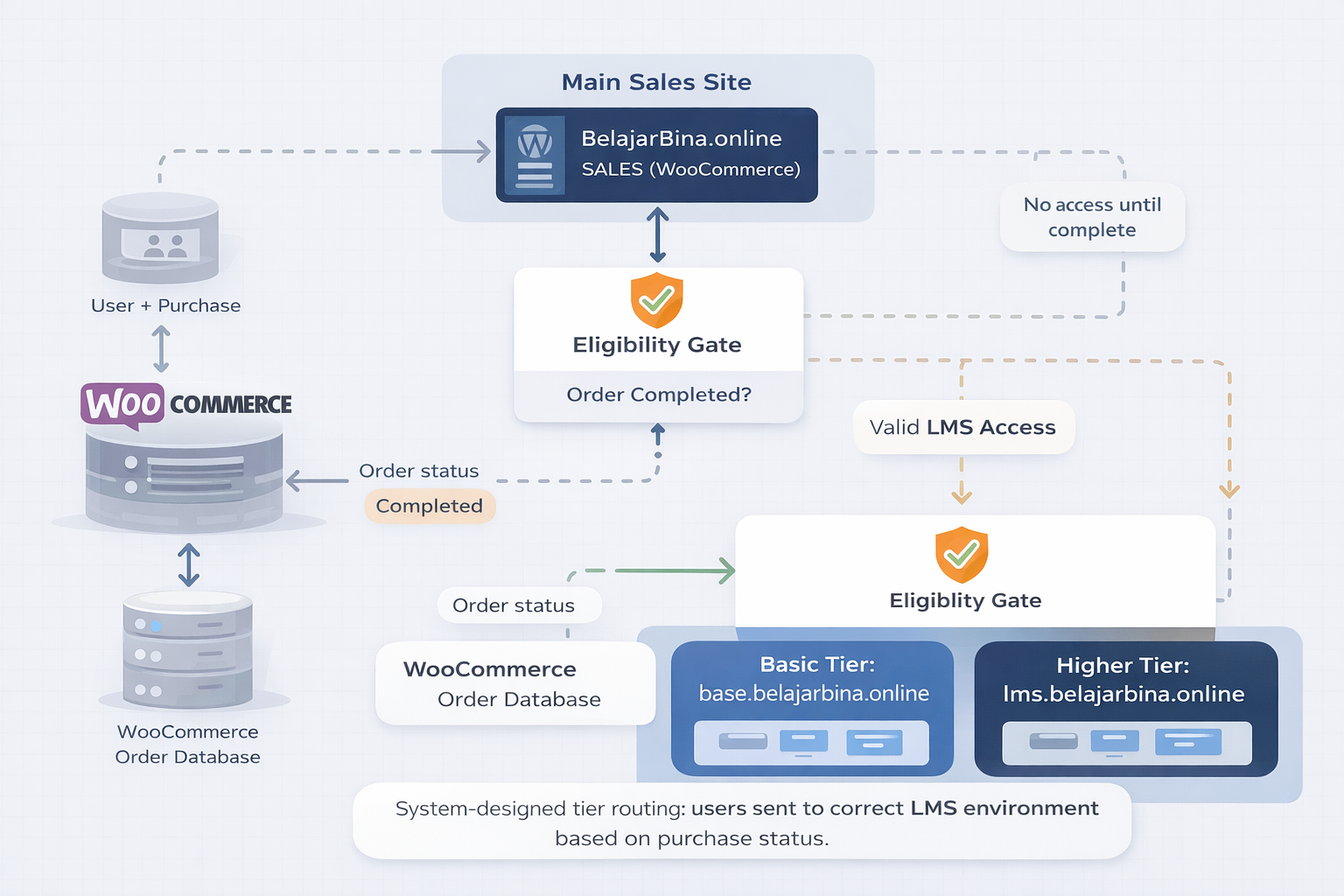
- Separated concerns: Sales & payments live on the main domain; learning delivery lives on LMS subdomains
- WooCommerce order status is the source of truth for access eligibility
- Tier-based routing reduces conditional logic and improves predictability under caching
- Architecture designed for low intervention (no constant backend reconfiguration)
2) Access Control Logic
The rule set that determines who gets access, when, and where.
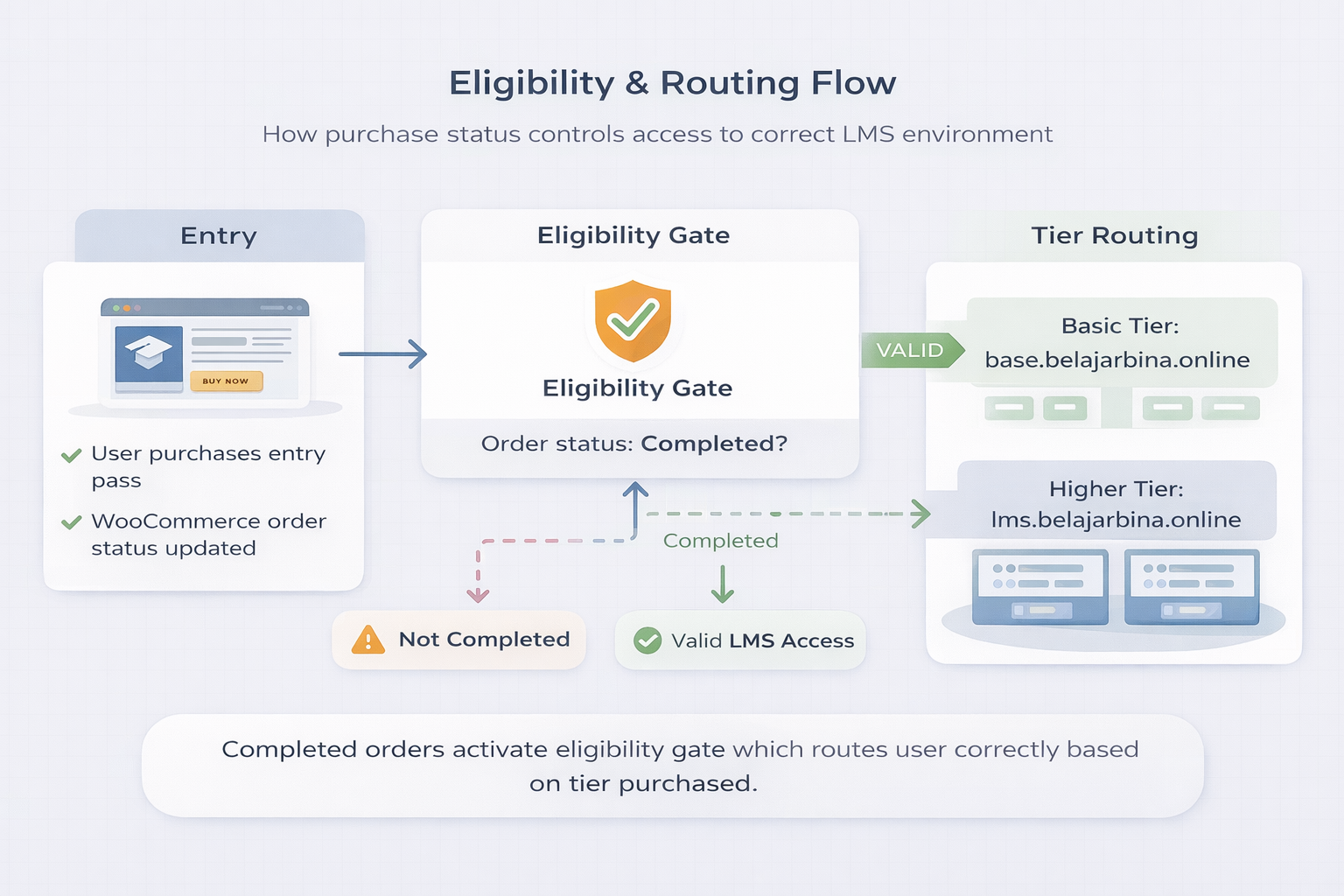
- User purchases an entry pass on the main site
- Access becomes valid only when order is Completed
- Completed status prevents unauthorized access and reduces edge cases
- Basic tier routed to
base.belajarbina.online - Higher tier routed to
lms.belajarbina.online - Separation reduces “conditional access” conflicts in a single environment
- Access checks remain consistent across sessions
- Less reliance on fragile per-page conditional rendering
- Improves reliability when caching is present
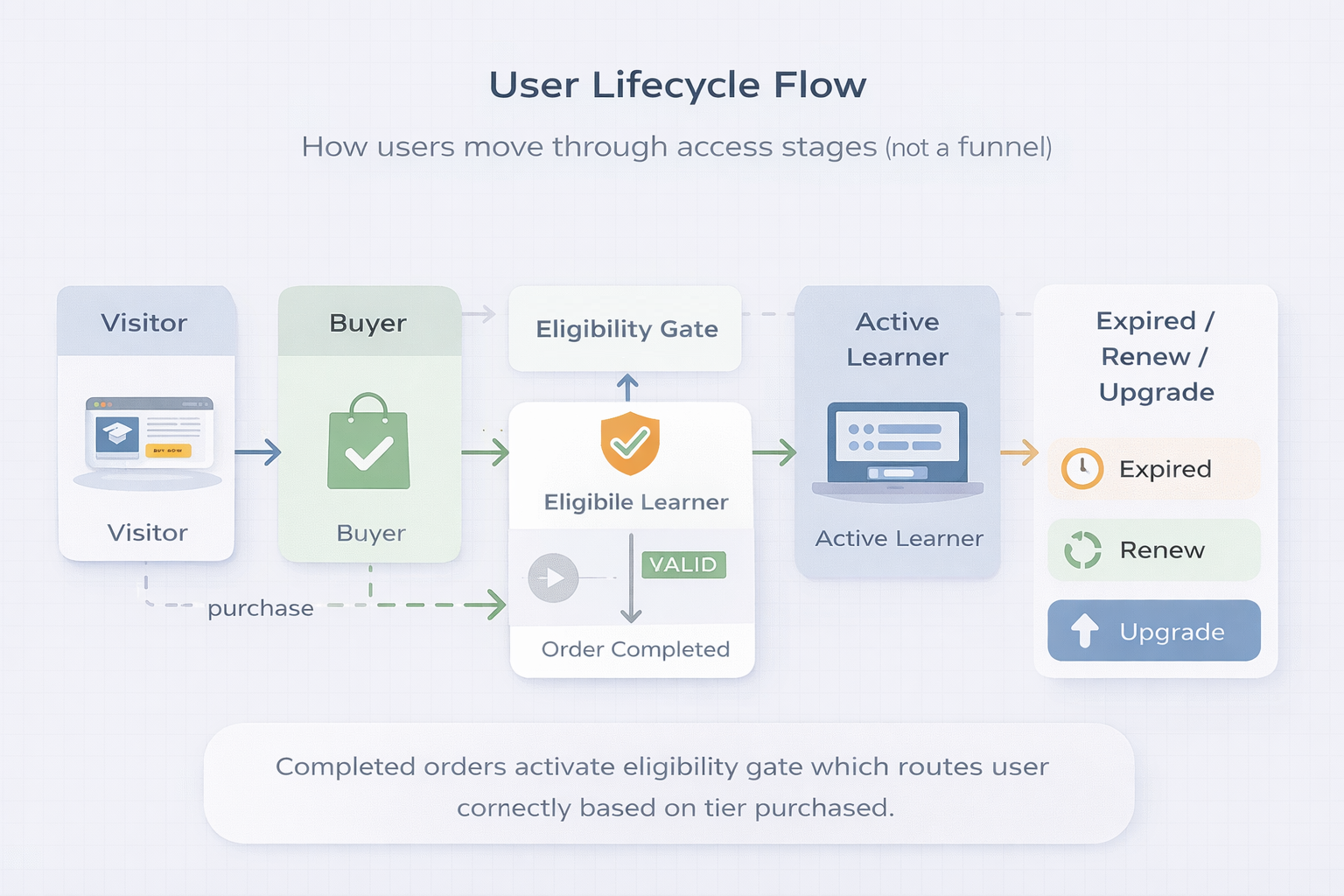
3) User Lifecycle Flow
Lifecycle framing: how users move through purchase → learning → expiry/upgrade.
Outcome (Qualitative)
The work prioritized predictable access behavior and maintainability over complex conditional rules.
- Predictable access behavior: fewer edge cases caused by tier/time/module restrictions
- Reduced runtime complexity: separation lowered dependence on conditional rendering inside one LMS instance
- Lower maintenance: architecture minimizes repeated backend configuration work
The platform runs as a stable sales → learning pipeline, where eligibility is clearly gated and tier complexity is handled structurally (separation), not through endless conditional rules.