Funnel & Checkout Optimization : Minyak Bidara Tradisi
Funnel & Checkout Optimization
Reduced friction between traditional-belief traffic and checkout decisions for a Minyak Bidara ecommerce funnel - where trust is judged by tone, restraint, and authenticity, not persuasion.
Goal
Move users from “percaya bidara” → “yakin nak beli dari kedai ini”
Constraint
Avoid “ubat cepat” framing, avoid aggressive urgency
Focus
Usage context, expectation-setting, checkout clarity
1) Identified Funnel Issues
Where hesitation appeared for a traditional remedy product.
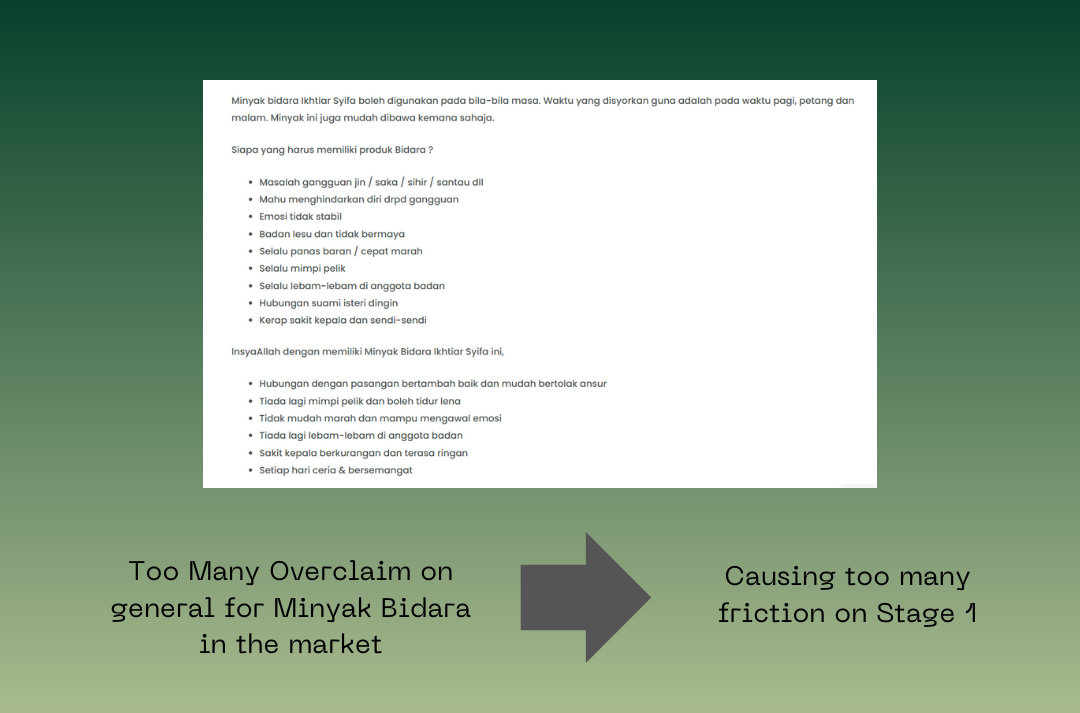
- Users trusted the concept of Bidara but questioned the seller credibility
- High “belief validation” behavior: users looked for how to use and what to expect
- Hesitation increased when messaging implied guaranteed outcomes or “sembuh cepat” vibes
- Checkout drop-offs were driven by uncertainty: authenticity, delivery, what happens after purchase
2) Optimization Strategy
Changes focused on building decision comfort without sounding like an “ads funnel.”
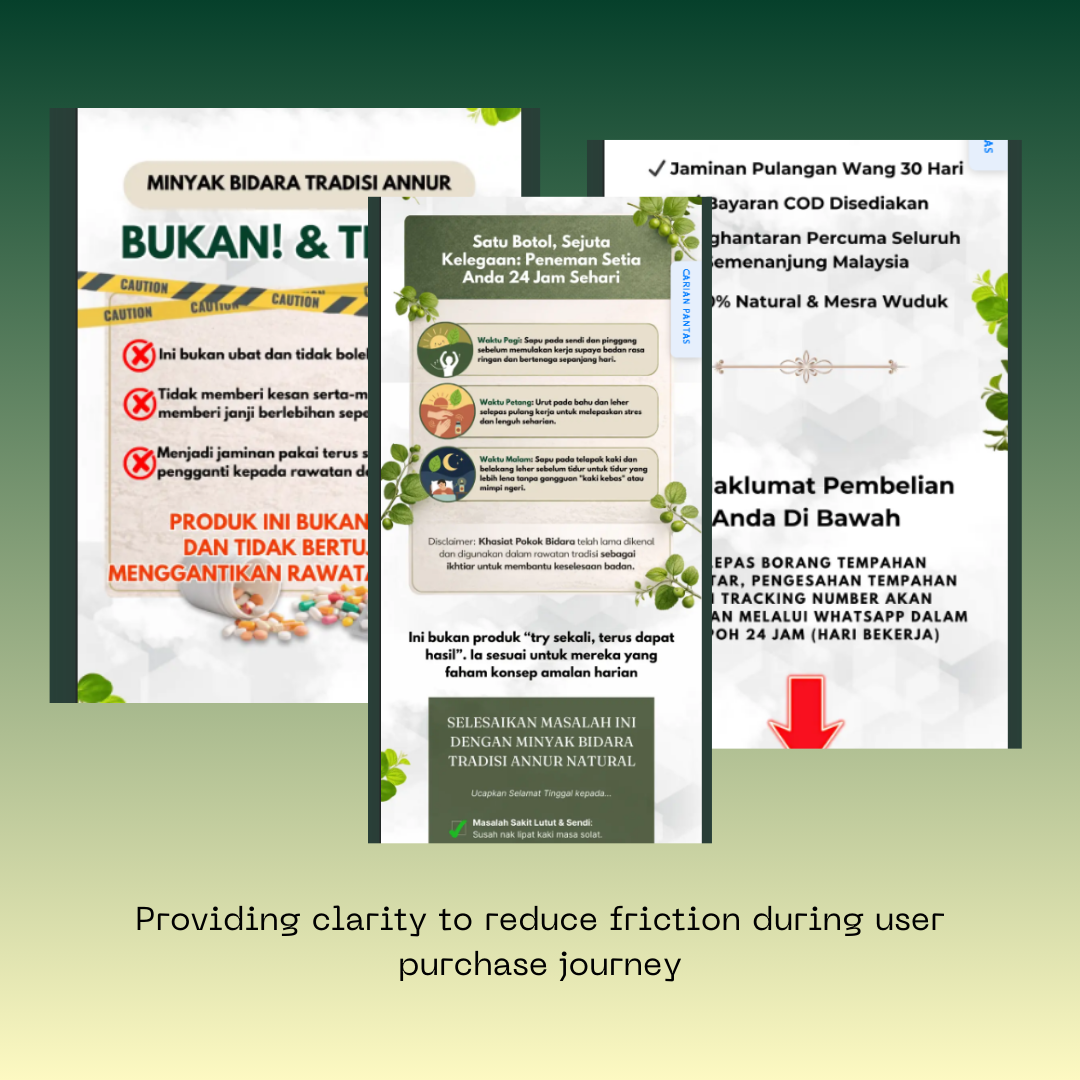
Usage-Led Clarity
- Explain how it’s typically used (routine, areas, frequency)
- Set expectations: not instant, not magic
- Separate “amalan” framing from hard claims
Trust by Restraint
- Reduce “sales pressure” language that breaks traditional trust
- Use calm, grounded tone (anti-hype)
- Clarify who it’s for / not for to filter wrong expectations
Checkout Confidence
- Clarify shipping + fulfillment timeline (no ambiguity)
- Highlight what buyer receives (quantity, packaging)
- Reduce last-step doubt with simple reassurance cues
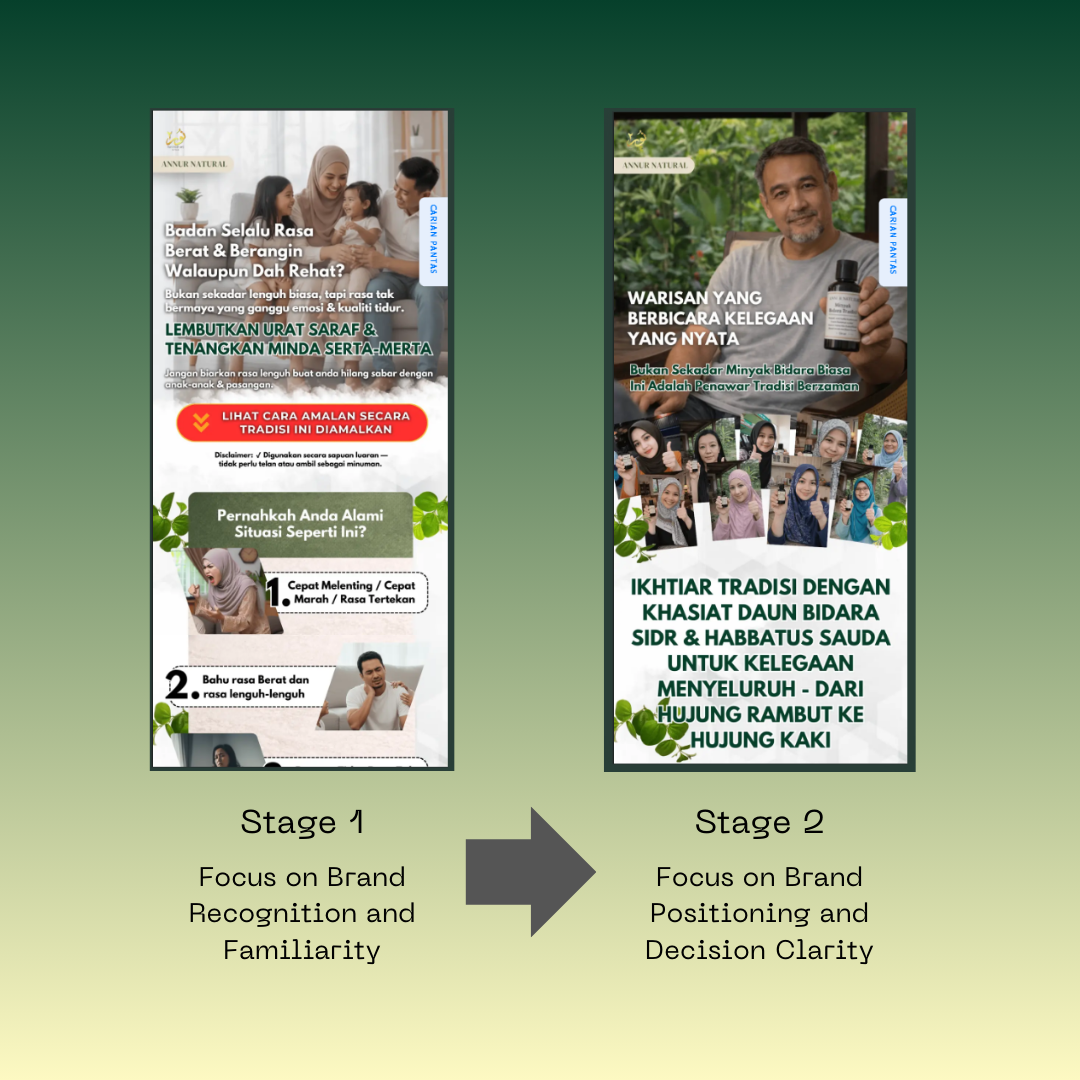
3) Stage 1 → Stage 2 Funnel Flow
How traffic progressed from “curious/recognition” to “purchase-ready.”
Outcome (Qualitative)
This work prioritized funnel stability and decision clarity over inflated performance claims.
- Cleaner progression from interest → consideration (less “random browsing” behavior)
- Reduced skepticism triggers caused by tone and claim framing
- More consistent pre-checkout behavior (users understood what they were buying and why)
Resulting system behavior
The funnel became belief-aligned — built to match how people evaluate traditional products, rather than forcing a “modern hard-sell” funnel style.